from the Lesson Zone

Students will understand seven-part rondo form through choreographed movement and active listening.
This lesson is designed to fulfill the 2014 National Standard for Music:
Demonstrate and explain how the expressive qualities (such as dynamics and tempo) and primary musical elements of music (such as form) are used in performers’ decisions to convey expressive intent. (Responding - MU:Re9.1.3a)
Recording of Zoltan Kodály's Viennese Musical Clock from 'Hary Janos Suite'
Clock Prop
Herald Trumpets
Crowns for King and Queen
Stick Horses and Shields for Knights
Flowers or Ribbons for Dancers

Step 1
Tell students, "Today we will be learning about rondo form. Let's start by building a giant sandwich." Draw the sandwich on the whiteboard from bottom to top. Label each section as you go.
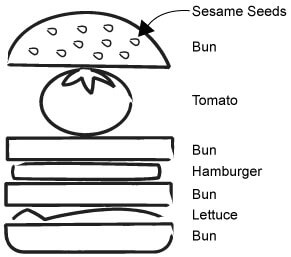
Step 2
Tell students, "Let's compare this giant sandwich to rondo form. The parts of a seven-part rondo are labeled ABACADA. A rondo may also have a Coda—which is extra music at the end for a special finish."
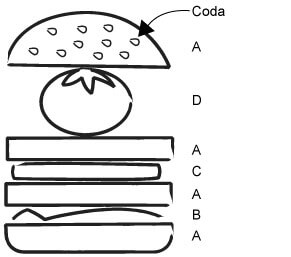
Explain that while the "bun" (A section) stays the same, it can change slightly in style each time, just like music.
Step 3
Tell students, "Let's listen to Viennese Musical Clock by Zoltan Kodály. As you listen, I'll point to the letters. Each time the 'A' section repeats, I want you to raise your hand." Start the recording.
Step 4
Ask students, "Have you ever seen a musical clock tower in a city square?"
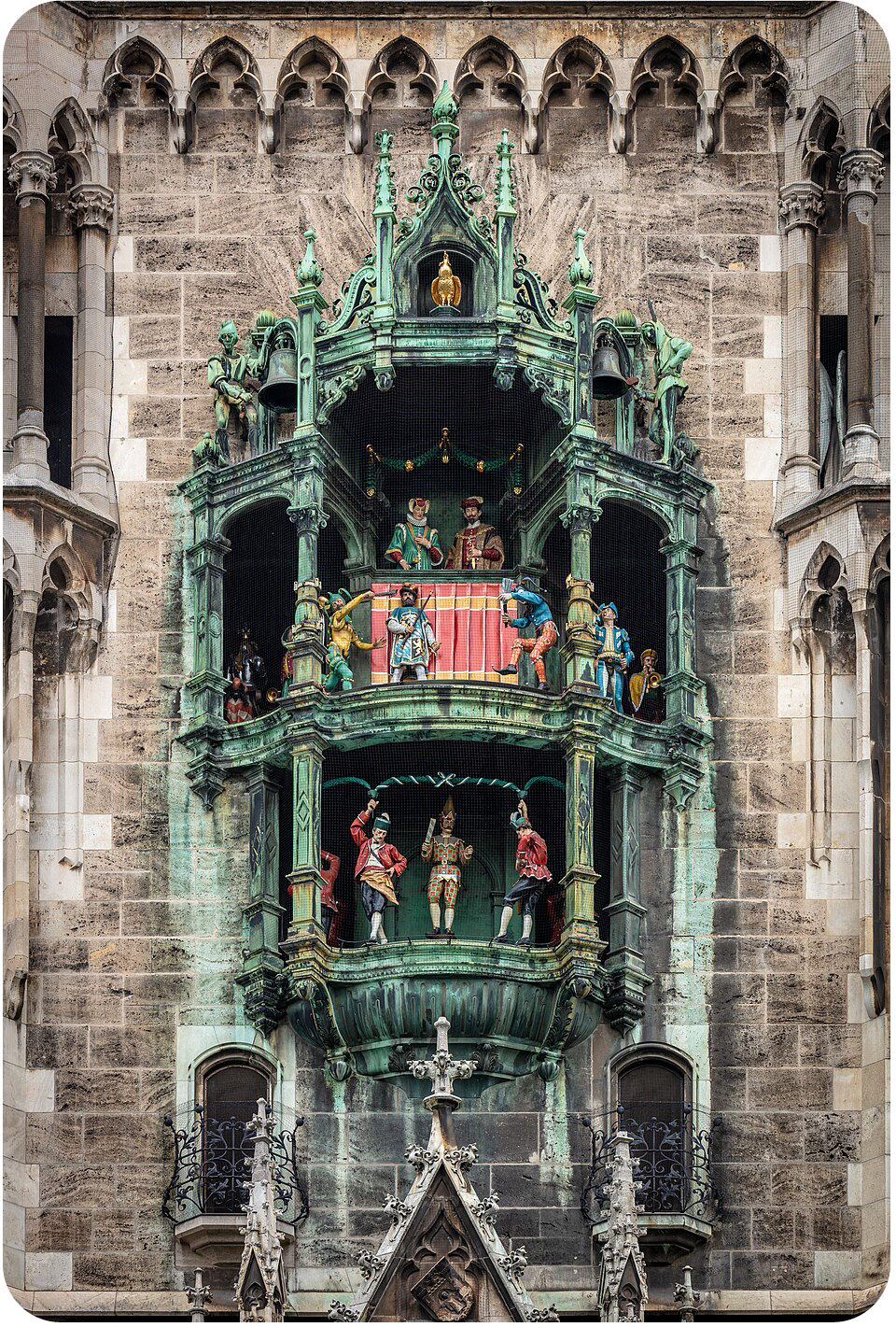 This is the Rathaus-Glockenspiel - a large mechanical clock located in Marienplatz Square, in Munich, Germany.
Step 5
Tell students, "Let's be a musical clock! Everyone will have a special part to play—dancers, trumpeters, knights, and even a King and Queen."
Step 6
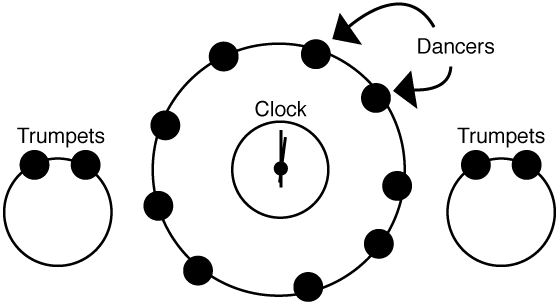
Assign sections to groups. The Clock announces twelve o'clock, Dancers take the A section, Trumpeters are B, the King and Queen are C, and the Knights are D. The Coda features everyone together!

Step 7
Choose parts for the students. Remind them that trying hard and good behavior might earn them a chance to switch roles later.
Clock: 1 Student
Trumpets: 4 Students
King & Queen: 2 Students
Knights: 2 Students
Dancers: Remaining Students
Step 8
Teach the movements section by section:
Clock - Stands in the center. Announces "It's 12:00 o'clock in Vienna" before the music starts.
Dancers - Spin clockwise around the circle during Section A. Exit when the section ends.
King and Queen - Walk from the back to the front, wave to their subjects, and return.
Trumpets - Walk to the front, raise trumpets to play, and return. Repeat for Coda.
Knights - Ride stick horses clockwise and counterclockwise, bumping shields as they pass.
Step 9
Perform the musical clock all the way through! Point to the sections on the board to help students know when it is their turn.
Step 10
Switch roles for students who demonstrated great effort and perform the piece again.
Step 11
Quiz students. "Who can name the parts of a seven-part rondo?"
Step 12
Perform one last time for the homeroom teacher. Have the students explain what they learned about rondo form.
Teacher-approved favorites that make planning a breeze and get kids excited to learn.


Freshly pressed — brand-new resources your students will love!
Instant unlimited access to 650+ premium piano & instrumental sheet music arrangements, theory worksheets and games, composer resources, and lesson plans. New resources added every month. Cancel anytime. Start $36 Unlimited Access

Andy Fling founded MakingMusicFun.net in 2007. With 14 years in the classroom and 19 years creating resources for elementary music education, he is guided by the belief that kids learn best when they're having fun. He is also a big believer in "unplugged" learning and personal connections. Instead of screens and "streaks," his resources focus on teacher-led lessons, real progress, and a lifelong appreciation for music. Read More »