from the Lesson Zone

Students will demonstrate active listening skills by responding to musical cues and describing the tempo and instrumentation of the piece.
This lesson is designed to fulfill the 2014 National Standard for Music:
Demonstrate and explain how the expressive qualities (such as dynamics and tempo) and primary musical elements of music (such as form) are used in performers’ decisions to convey expressive intent. (Responding - MU:Re9.1.3a)
Recording of Flight of the Bumblebee

This is a great closing activity for a unit on Russian composer Nikolai Rimsky-Korsakov. It is best suited for students in grades K-3.
Step 1
Tell students, "Today we are going to listen to a famous and fast piece of music called Flight of the Bumblebee. It was written by a Russian composer named Nikolai Rimsky-Korsakov."
Step 2
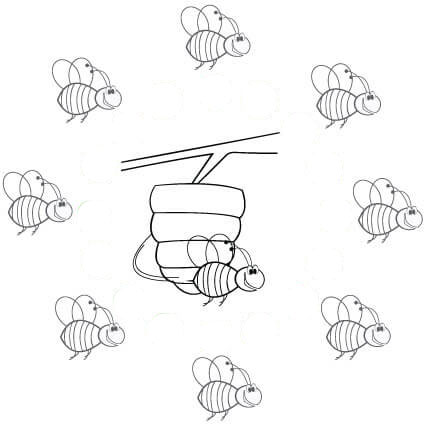
Ask half of the class to stand in a circle facing into the center. This group will be the "hive." The remaining students will be the "bumblebees."
Step 3
Explain the rules: "When the music starts, the bumblebees will run in and out of the hive. When the music stops, the hive members will quickly join hands to trap the bumblebees inside!"
Step 4
Start the recording. When you pause the music, the hive "closes." Any trapped bumblebees now become part of the hive circle. Repeat the process until only one bumblebee remains. This student is the winner!
Step 5
During breaks in the game, ask the students about what they are hearing. Use these questions to guide them:
How would you describe the tempo (speed) of this music?
What instruments do you hear playing the fast notes?
Why does the music sound like bumblebees?
Step 6
Perform the activity again, switching roles so everyone has a chance to be a bumblebee.
Teacher-approved favorites that make planning a breeze and get kids excited to learn.


Freshly pressed — brand-new resources your students will love!
Instant unlimited access to 650+ premium piano & instrumental sheet music arrangements, theory worksheets and games, composer resources, and lesson plans. New resources added every month. Cancel anytime. Start $36 Unlimited Access

Andy Fling founded MakingMusicFun.net in 2007. With 14 years in the classroom and 19 years creating resources for elementary music education, he is guided by the belief that kids learn best when they're having fun. He is also a big believer in "unplugged" learning and personal connections. Instead of screens and "streaks," his resources focus on teacher-led lessons, real progress, and a lifelong appreciation for music. Read More »